Everest Base Camp Trek Fly Back By Heli

Recommended by 99% of travelers
Everest Base Camp Trek
Everest Base Camp Trek By Heli
Everest Base Camp Trek
Duration12 Days
Trip GradeModerate
CountryNepal

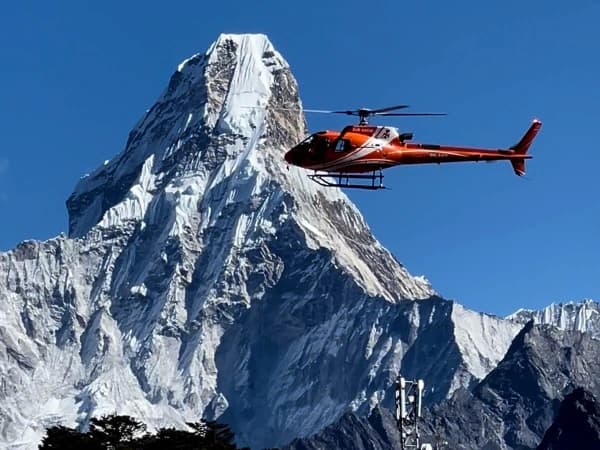
The Everest Base Camp Trek Fly Back By Heli is the best choice for trekkers who want both the thrill of reaching the base of Mount Everest and the ultimate luxury that the Everest trekking and climbing region can offer to adventurers. For those short on time who do not want yet another demanding trek back from Everest Base Camp and want to save energy, the helicopter return after the Everest Base Camp (EBC) Trek is an excellent option.

Although the Everest Base Camp Trek Fly Back by Heli itinerary of 12 days also begins typically after a mountain flight to Lukla, instead of trekking down after reaching Everest Base Camp, you will board a helicopter back to Lukla and then fly over to Kathmandu on the very next day. In comparison to the classic Everest Base Camp Trek or other options like the Everest Three High Passes, it may come costlier price.

At Mountain Ascents, one of the licensed trekking agencies in Nepal managed by highly experienced mountain guides, the Everest Base Camp Trek Fly Back Heli cost, including for the years 2026 and 2027, is reasonable. The exact Everest Base Camp Trekking Fly Back by Heli cost may vary based on group size and services chosen, such as private rooms and Western menus. We manage all the logistics to ensure a hassle-free journey.

Bookings are now open for 2026 and 2027 to enjoy a modern twist on the legendary trek, an ideal journey for a short Everest Base Camp Trek without missing out on both the major highlights and the comfort that the Everest region has to offer. Still requiring a good level of physical fitness, get ready to enjoy the bird’s-eye view of mountains, glaciers, icefalls, deep valleys, and Sherpa villages. Contact us now and reserve your spot.

Trip Highlights

  • A short yet adventurous and scenic mountain flight to Lukla with one of the world’s most dangerous airports, a thrilling start.
  • Various perspectives of Mount Everest and surrounding snow-capped peaks like Lhotse, Nuptse, and others.
  • Sherpa villages, culture, crossing of high suspension bridges, and a diverse Himalayan landscape from lush forests to the alpine meadows within the Sagaramtha National Park.
  • A serene ambience of Tengboche Monastery, the largest Buddhist monastery in the Everest region, watched over by the pyramid-shaped, sky-towering peak, Ama Dablam.
  • Reach the iconic Everest Base Camp (5,364 m), the starting point for brave climbers to complete the Mount Everest Expedition.
  • Side hike to high-altitude ridge, also called the Everest Trek’s ultimate viewpoint, Kala Patthar (around 5,644 m), famous for magical sunrise and sunset views, especially close-up sights of Mount Everest itself after the summit point itself.
  • Direct heli flight to Lukla from Kala Patthar instead of several days of extensive descending trek, etc.

What to expect during the trek to Everest Base Camp and the flight back by helicopter?

The first half of the journey is trekking through the Khumbu Valley, the region home to legendary Sherpas celebrated worldwide for their superhuman-like mountaineering skills and adaptation to arduous mountain surroundings, and the top of the world, Mount Everest (8,848.86 m). Sagarmatha in Nepal and Chomolungma in Tibet, Namche Bazaar provides you with the first-ever glimpse that gradually opens up as the trek progresses.

Tengboche, Dingboche, Lobuche, Gorak Shep, and finally Everest Base Camp, with a side hike to Kala Pathhar (around 5,644 m), which is also the maximum elevation gain. Helicopter charter is only available after it. Therefore, it is a must that you have a good level of physical fitness for a better experience, especially the phases with steep uphill and downhill walks, where the weather can change at any time and add to the challenges.

An adrenaline-rushing start with a mountain flight to Lukla

Like any other Everest treks and climbs, such as the Everest Three High Passes Trek, Everest Circuit Trek, Everest Gokyo Lakes Trek, Mera Peak Climbing, Island Peak Climbing, and Lobuche East Peak Climbing, the Everest Base Camp Hiking fly-in-return helicopter also typically begins with a flight to Lukla from Kathmandu or Ramechap, Manthali, during the peak trekking and climbing seasons of spring and autumn to avoid over-air crowds.

Located at an elevation of 2,860 m/9,383 ft above sea level, its airport, officially called the Tenzing-Hillary Airport, is listed among the world’s most dangerous airports due to its short runway, challenging mountain setting, and high altitude. Therefore, a successful flight here is an adventure in itself. Aerial views of the green valleys, snow-capped mountains, cascading waterfalls, Nepalese villages, and, in a while, crisp mountain air—memories of a lifetime.

Tracing the legendary Everest Base Camp Trekking Route

From Lukla, also called the main gateway to the Everest trekking and climbing region in Nepal, as the name suggests, you will follow the trails that legends like Sir Edmund Hillary and Tenzing Norgay Sherpa once used for trekking before climbing Mount Everest, the world’s tallest mountain range. Through the traditional mountain villages of Phakding, Namche Bazaar, Tengboche, Dingboche, Lobuche, and Gorak Shep.

Deeper into the Sagarmatha National Park, one of the UNESCO World Heritage Sites from Nepal, during the Everest Base Camp (EBC) Trek by return heli, you will not miss out on the diverse landscape of the iconic Khumbu Valley. From dense forests of rhododendron, bamboo groves, and oak to alpine meadows and grassland, sometimes cascading waterfalls and streams, and close to snow-capped mountain ranges, the scenery is unparalleled.

Mountain views, wildlife, and Sherpa culture

Right from the beginning of the Everest Base Camp Trekking fly back by Heli, you can see several snow giants, and as you move closer and closer to Everest Base Camp, the mountain sights also get more exclusive. Everest, Lhotse, Nuptse, Ama Dablam, Thamserku, and other surrounding ranges on a clear weather day, the journey ensures you a visual retreat from start to end along the Sagarmatha National Park.

The park is also home to diverse flora and fauna and one of the indigenous ethnic communities of Nepal, the Sherpas. On a lucky day, you may also come across rare species like the Himalayan Tahr, Himalayan musk deer, and red panda in the lower regions, and in the mid-altitude, the elusive snow leopard as well. As you stay at local teahouses managed by Himalayan locals, you have an opportunity for insider insight into the mountain lifestyle.

Sense of adventure and part of golden hour

Reaching the base of the highest mountain peak in the world, Everest Base Camp (5,364 m), is beyond park walking. The closest you will be to Mount Everest without summiting the peak itself, high altitude, some steep ascents and descents, and occasional rocky trails—it demands a good level of physical and mental preparation. Hence, as you finally make it here, the adrenaline rush is otherworldly, surrounded by snow-capped peaks from every direction.

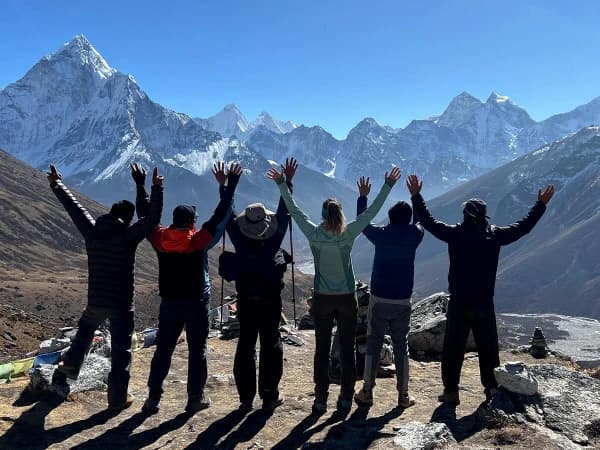
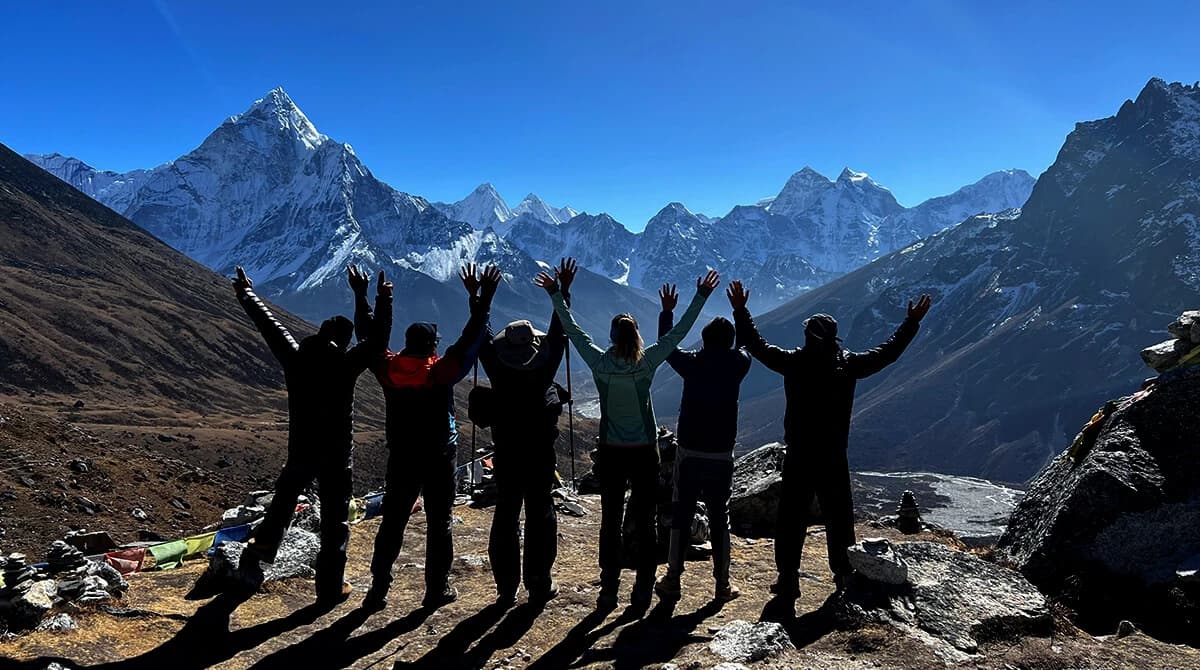
The Everest Base Camp Hike and return by Heli itinerary of 12 days does not stop here; you also take a side hike to Kala Patthar (around 5,644 m) with the closest views of Mount Everest. Also, the highest point you arrive at on the Everest Base Camp Trekking Fly back by helicopter itinerary, the views from here are further sensational during sunrise and sunset. The golden hues of first or last sunlight over the white mountains—it is one of a kind.

A pleasing return to Lukla, a memorable conclusion

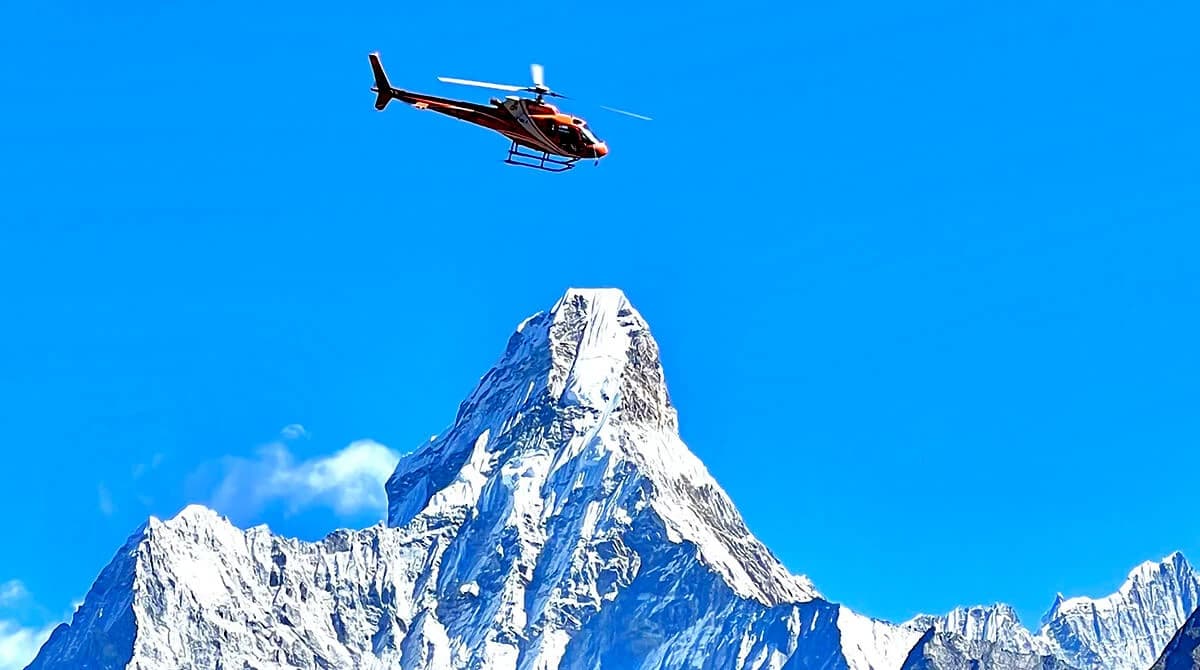
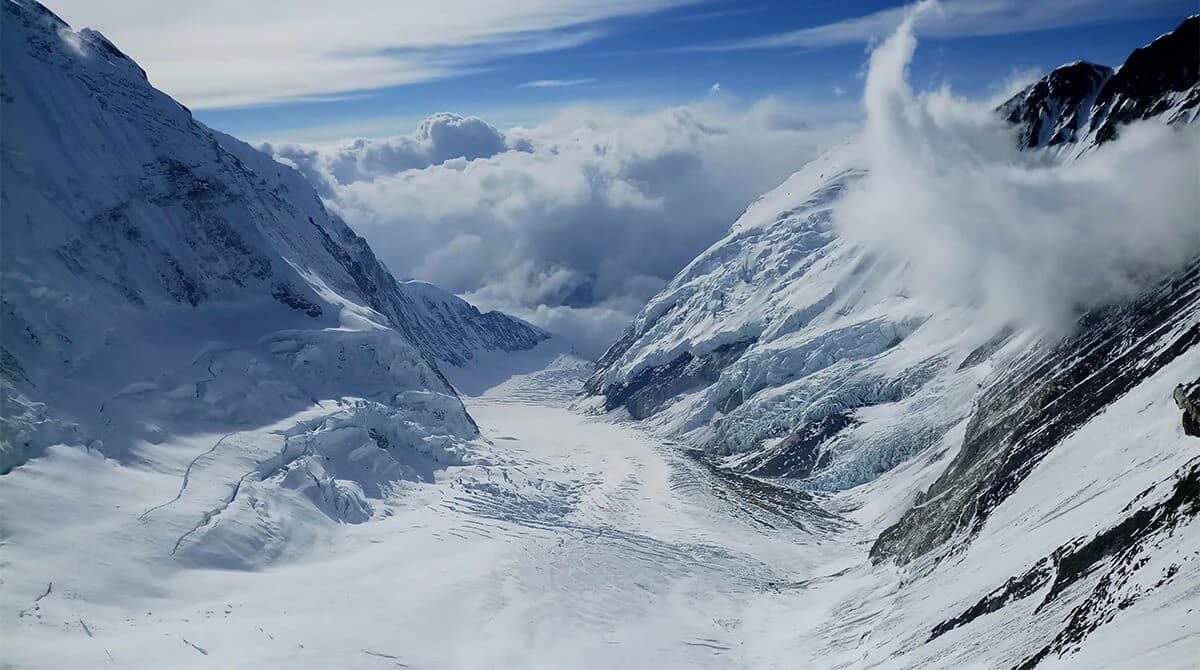
Instead of prolonged descents after high-altitude trekking to Everest Base Camp and Kala Patthar, the heli flies back after the Everest Base Camp trip. Over glaciers, deep valleys, and sky-towering peaks, it minimizes the knee strain, risks associated with steeply descending trails, and trekking time. You get to conclude the Himalayan trek to Everest Base Camp in style with a helicopter ride back to Lukla at first and then to Kathmandu.

Therefore, the Everest Base Camp Trek with helicopter return is an ideal journey for trekkers with limited time, individuals who do not want extensive steep descents, and families with children or aged members. It also ensures reduced risks of acute mountain sickness (AMS) and other challenges, so if you are looking for a high-altitude trek with comfort, the Everest Base Camp Trek Fly Back by Heli Itinerary of 12 days will not disappoint you.

The Everest Base Camp Trek Fly Back By Heli Itinerary and Cost for 2026 and 2027

The Everest Base Camp Trekking with return helicopter itinerary of 14 days begins with your arrival in the Kathmandu Valley; on the second day, there is a flight to Lukla, most of the time from Kathmandu, but during peak trekking and climbing seasons in spring and autumn, it is often redirected from Ramechaap or Manthali to avoid the air traffic. Regardless, on the same day of the flyover to Lukla, the walking also begins, stopping at Phakding for the night.

Thereafter, you follow the classic Everest Base Camp Trekking Trail through Monjo, Namche Bazaar, Tengboche, Dingboche, Lobuche, Gorak Shep, Everest Base Camp, and then Kala Patthar before boarding a helicopter back to Lukla. There are extra acclimatization days at Namche Bazaar and Dingboche so that your body gets enough time to familiarize itself with the arduous mountain surroundings. Morning hike to nearby high ridges.

Or you may choose to explore the traditional Sherpa villages; either way, it supports the hassle-free trip, and you get to explore and see all the main highlights that the Everest Himalayas have to offer for trekkers on the way to Everest Base Camp. Hence, it is considered one of the best Everest Base Camp Trek itineraries, including for the years 2026 and 2027, which further allows a comfortable return to Kathmandu with a helicopter return.

We are offering early bird booking and group booking with more than 10 members, special discounts, including for the years 2026 and 2026, on this Everest Base Camp Trek Fly Back by Heli Cost. Limited seats; grab this opportunity now. We ensure you the best available services. For professional support from start to end or for planning differently, contact us, share it now, and enjoy a more personalized journey.

Why Trek with Mountain Ascents?

Our Strengths

  • Certified and Experienced Guides
  • High Success Rate
  • Immersive/authentic experience
  • Trek/Climbing Confidence and Highly Motivated Crew
Everest Base Camp Trek Fly Back By Heli Itinerary

Expand All

A warm welcome to the country of majestic green hills and snow-capped mountain ranges. As you complete the customs clearance at the gate of the Tribhuvan International Airport (TIA), one of our officials from Mountain Ascents greets you and also transfers you to your hotel. In the early evening is a briefing session, and later on, a welcome dinner.

Max Altitude: 1,350m/4,429ftMeals: Complimentary-DinnerAccommodation: Three-Star-Hotel

The Everest Base Camp Trekking flyback by helicopter officially begins today with a short and scenic mountain flight to Lukla itself, the common trek starting point for most of the high-altitude treks and climbs. Rest for a while as a fresh mountain embraces you, and in a while, you trek to Phakding through a beautiful forest of oak and rhododendron.

Max Altitude: 2,860m/9,186ftMeals: Breakfast-Lunch-DinnerAccommodation: Local-Tea-House

You continue to follow the classic Everest Base Camp trekking route, and the plan for today is to arrive at the Sherpa capital, Namche Bazaar, from Phakding. In between, you stop at Monjo, the official gateway to the UNESCO World Heritage Sites, the Sagarmatha National Park, and a last ascent provides you with the first glimpse of Mount Everest (the Sagarmatha).

Max Altitude: 3,438m/11,280ftMeals: Breakfast-Lunch-DinnerAccommodation: Local-Tea-House

Reaching 3,000 m above sea level from around 1,400 m at the Kathmandu Valley, before you ascend to further high-altitude areas, proper acclimatization is essential so you do not encounter symptoms of altitude sickness. The best thing to do is hike up and sleep low. Visit nearby high-altitude ridges or at least the Everest View Hotel and explore the village.

Max Altitude: 3,438m/11,280ftMeals: Breakfast-Lunch-DinnerAccommodation: Local-Tea-House

After two days and nights at Namche Bazaar, the Everest Base Camp hiking trail resumes, and you won’t stop until arriving at Tengboche, with the largest Buddhist monastery in the Everest trekking and climbing region, Tengboche Monastery. A bit more rugged, deeper into the iconic Khumbu region, you may enjoy sights of Phungi Thenga, Ama Dablam, and Everest.

Max Altitude: 3,870m/12,697ftMeals: Breakfast-Lunch-DinnerAccommodation: Local-Tea-House

You move a step closer as you trek further to Dingboche from Tengboche. You can feel the change in the air; it's crisper in the lower region of Everest. Villages are sparse now; the crossing of Imja Khola via suspension bridges passes through the alpine forests, and there are more open views of mountains. It is a rewarding day overall.

Max Altitude: 4,360m/14,305ftMeals: Breakfast-Lunch-DinnerAccommodation: Local-Tea-House

The Everest Base Camp Trek Fly Back by Heli is designed so that even first-timers can also complete the journey without much hassle. So this day in Dingboche is dedicated as a buffer day to hike up and sleep low for better adaptation to the arduous mountain surroundings. Nagarjun Hill (5,910m) is nearby, or at least unwind around the village of Dingboche.

Max Altitude: 4,360m/14,305ft or 5,610m at Nagarjun HillMeals: Breakfast-Lunch-DinnerAccommodation: Local-Tea-House

Enjoying close-up views of Taboche and Cholatse and passing by stone memorials, expect some heart-touching moments as well as you leave Dingboche behind and move forth to Lobuche, yet another tiny yet beautiful mountain village on the Everest Base Camp hiking route. Expect some steep climbs.

Max Altitude: 4,940m/16,208ftMeals: Breakfast-Lunch-DinnerAccommodation: Local-Tea-House

Now you head to the place also called the base of the Everest Base Camp itself, which also sits near the ridge known as the ultimate Everest Viewpoint, without the Mount Everest summit itself, from Kala Patthar to Lobuche at first and then to Everest Base Camp itself, where you can meet brave climbers in spring and autumn.

Max Altitude: 5,364m/17,599ftMeals: Local-Tea-HouseAccommodation: Breakfast-Lunch-Dinner

While you are in the Everest region, you will not miss out on the panoramic 360-degree mountain views, which are further magical during sunrise and sunset. So early in the morning, even before dawn, you hike to the highest point of the Everest Base Camp Trekking Trip as well, Kala Patthar (around 5,644 m), spend some time, and fly directly by heli to Lukla.

Max Altitude: 5,545m/18,193ft - 5,644mMeals: Breakfast-Lunch-DinnerAccommodation: Local-Tea-House

Based on the 12 days for Everest Base Camp Trek by Heli itinerary, it is your last day in the Everest trekking and climbing region in Nepal. Breakfast with warm tea, and in a while, you fly back to Kathmandu from Lukla. Amazing aerial views; you may tip your guides and porters (not mandatory), but for their hard work, they do deserve it all.

Max Altitude: 2,860m/9,186ftMeals: BreakfastAccommodation: Three-Star-Hotel

The thrilling Everest Base Camp trekking, flying back by helicopter, concludes on this day. If the flight is scheduled in the afternoon, you will have ample free time in the morning to unwind one more time in the vibrant town of Thamel. Three hours before the flight, a team from Mountain Ascents helps you with packing and also drops you off at TIA. Have a safe journey.

Meals: Breakfast
STILL CONFUSE?Download brochure or customize your trip.
Customize Trip

Cost Details

Includes

  • Airport transfers by private vehicles upon arrival and departure in Kathmandu.
  • Pre-trek meeting and trip briefing.
  • 3 nights’ hotel accommodation in a tourist standard hotel in Kathmandu.
  • Domestic flight transfers as per itinerary: Kathmandu-Lukla, vice versa, and Heli from Kala Patthar to Lukla.
  • 1 professional, licensed, and English-speaking guide and 1 assistant guide for 5 clients.
  • Enough number of porters for the trek (as required).
  • Tea house accommodation during the trek.
  • Food during the trek (full board with breakfast, lunch, and dinner with tea/coffee and seasonal fresh fruits).
  • In the worst case, help with all rescue and evacuation arrangements.
  • All necessary trekking permits and documents related to permits
  • First aid medical kit, and an oximeter to check pulse, heart rate, and oxygen saturation at higher altitudes.
  • Guides’ and staff’s salaries and wages
  • All applicable taxes are as per the government rules and regulations.
  • All organizational requirements.

Excludes

  • Nepal Visa fee for the stay time
  • Your international flight to and from Nepal
  • Travel insurance (for helicopter evacuation if needed whilst trekking)
  • Personal expenses such as laundry, telephone, internet/e-mail, etc.
  • Bar and beverage bills
  • Tips for guides, porters, drivers, and other crew
  • Any additionals not listed under "Service Inclusions."

Additional Info

When is the best time to do the Everest Base Camp trip and fly back by Heli?

While doable throughout the year, especially when there is a chopper ride back from Everest Base Camp, including in summer and winter, which are typically considered off-seasons for high-altitude treks and climbs in Nepal, the best seasons still remain the spring and autumn. Typically spanning from March to May and September to November, these times of the year feature the most favourable weather with a high success rate.

Stable weather means the chances of flight cancellation also decrease, and trekking trails also remain mostly dry with clear skies and moderate temperatures. There is less chance of rain and snowfall in spring; in addition, it brings the vibrant landscape when the rhododendron (Laligurans), along with other wild plants, blooms. Everything in the Himalayas is at its prime; hence, it is the best season for the EBC Trek with Heli Back.

Food, accommodation, and other facilities during the Everest Base Camp trekking and return by helicopter?

The increasing popularity of the Everest region in Nepal as one of the world’s best trekking and climbing destinations means it now boasts well-established hiking routes and teahouses that take care of your daily needs, from food and lodging to drinking water to other amenities like wifi, hot showers, private rooms, heating systems, and electricity for charging devices. Though luxury items in remote, rugged, and high-altitude Himalayas, you can upgrade.

Otherwise, teahouses, lodges, and guesthouses offering simple menus and basic bedding, including mattresses, blankets, and pillows in traditionally furnished rooms with twin-sharing bedrooms and common bathrooms and toilets, are the standard ones, including on the journey to complete the Everest Base Camp Trekking and fly back by helicopter to Kathmandu via Lukla. Menus are also often limited to Nepalese and Tibetan dishes.

What are the permits for trekking to Everest Base Camp and fly back by heli?

You will need at least two permits to complete the Everest Base Camp hike and fly back by Heli: the Sagarmatha National Park entry permit and the local Khumbu Pasang Lhamu Rural Municipality Entrance Permit. The collected permit fee goes to the environmental and cultural conservation projects, maintenance of trails, and also support for the locals from the Himalayas who have made it possible for us to get access to majestic Himalayan regions.

By getting these permits, you also support the sustainable and responsible tourism practices, besides the legal entry to the Sagarmatha National Park and iconic Khumbu Valley, including for the hiking trip to Everest Base Camp with a helicopter return to Kathmandu via Lukla. No need to worry; our comprehensive package includes arranging essential permits upon booking with us, so you do not face a potentially long queue, especially in spring and autumn.

Can you see symptoms of acute mountain sickness (AMS) during the Everest Base Camp hike and fly back by helicopter?

Yes, reaching the maximum height of approximately 5,644 m above sea level at Kala Patthar, there are chances of AMS, in general altitude sickness, on the Everest Base Camp Hike Trip Fly Back by Heli. When you ascend to a higher altitude rapidly without proper acclimatization, anyone, regardless of their age, experience, or fitness level, can be affected by altitude sickness.

Symptoms include nausea, headache, fatigue, dizziness, and loss of appetite, and a mild and prolonged stay at a low oxygen level can further lead to fatal conditions like HACE and HAPE. To prevent it, during trekking days, walk at your pace, eat healthy, do not skip meals, stay hydrated, and most importantly, for better acclimatization, on rest days, hike up to nearby high-altitude ridges or landmarks and sleep low, a golden rule.

Everest Base Camp Trekking Fly Back By Heli, guide, and porter necessary

No wonder there is ease of flying back by helicopter after the Everest Base Camp Trek, but you never underestimate the Himalayas' terrain. Especially for beginners in an unknown country that bears diverse yet unknown landscapes, culture, customs, and traditions, and high Himalayan trekking trails known for the inherent risks of unpredictable weather that changes in the blink of an eye, local guides and porters are the real heroes.

Well-trained for high-altitude treks and climbs, born and brought up in the Himalayas, and licensed, a local guide leads and navigates the tough terrain for you. Those from Mountain Ascents also monitor your health and share the safety tips, and their connection may help you get the best-suited accommodation and meal option even during prime seasons, while porters lift a heavy load from your shoulder for you to conserve your energy and focus on the trip.

Gears and Equipment

The following gear and equipment are recommended by Mountain Ascents for the Everest Base Camp Trek Fly Back by Heli:

Headwear

  • Sun Cap
  • Fleece Hat/ Warm Hat (1-2 Pcs)
  • Neck Gaiter (2 Pcs)

Upper Bodywear

  • Thermal Top Base Layer (2 Pcs)
  • Fleece Jacket (1 Pcs)
  • Gore-Tex Jacket (1 Pcs)
  • Down Jacket (1 Pcs)
  • Cotton T-Shirt (2 Pcs)

Hands

  • Thin Fleece Gloves (2 Pairs)
  • Wind Stopper / Screen Tap Gloves
  • Trekking Poles

Lowerbody

  • Thermal Bottom Base Layer (2 Pcs)
  • Fleece Trouser (1pcs)
  • Gore-Tex Pant (1 pcs)
  • Mid Weight Pants (1Pcs)
  • Lightweight Quick-Dry Trekking Pants (2-3 Pairs)
  • Gaiters for trekking boots

Footwear

  • Normal Socks (2-3 Pairs)
  • Trekking Shoes (Gore-Tex)
  • Slipper (1 Pair)

Travel Documents

  • Valid Passport
  • Credit Cards
  • PP Size Photo (4 Pieces)
  • Insurance Paper And Contact Address
  • Family Members / Company’s Contact Address

Sun Stuffs

  • Banana Boat/ Nivea Sun Cream (-20 Spf)
  • Lip Guard -20 (Spf)
  • Sun Glasses (Uv Protection)

Toiletries

  • Toilet Paper / Wet Tissue
  • Toothpaste
  • Toothbrush
  • Soap
  • Towel
  • Garbage Bag

Eating & Drinking

  • 1 Ltr. Water Bottle
  • 1/ 1.5 Ltr. Thermos
  • Mug
  • Spoon/ Fork
  • Bowl

Sleeping Bags

  • Sleeping Bag -20OC to -30OC (Returnable)
  • Thermarest Mattress (Cell Foam)
  • Pillow

Bag Packs

  • Rucksacks 35L - 45L

Medical & First Aid

  • Brufen / Ibuprofens
  • Antibiotic
  • Diamox
  • Paracetamol
  • Handy Plaster
  • Crack Bandage
  • Tincture Iodine
  • Ondem
  • Cetirizine
  • Electrolyte
  • Minil 10mg (Palpitation, anxiety)
  • Codopar (Headache & chest pain)
  • Salbetol 4mg (Breathless)
  • Azithromycin 500mg (chronic tonsillitis, fever, nose, throat infection-must take 5 days)
  • Flupen 250mg (prevent wound infection)
  • Allegra 120/180mg (Allergic tonsil)

Miscellaneous

  • Nail Cutter
  • Umbrella / Rain Coat
  • Hot Water Bag
  • Pee Bottle
  • Trails Maps
  • Head Lamp
Need Help? Call Us+977 9860605609